

Written by: Asım Kılınç, Esq., Immigration Attorney, Clinch Law Firm
Hundreds of thousands of applicants currently navigating the United States immigration system are facing a highly critical new development. Effective April 27, 2026, U.S. Citizenship and Immigration Services (USCIS) has mandated new, expanded FBI security and background checks for Green Card (Adjustment of Status), Citizenship (Naturalization – N-400), and Asylum applications.
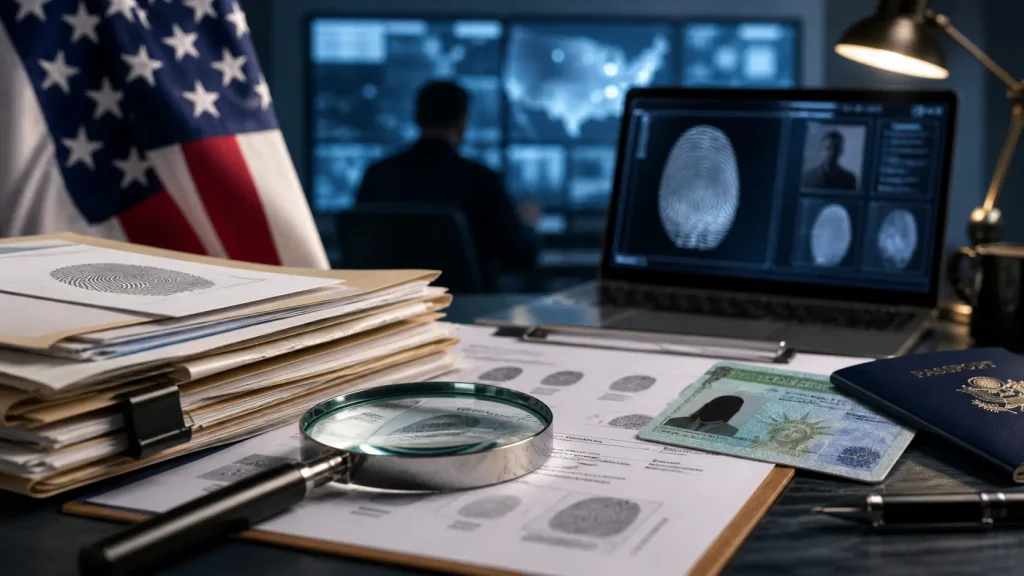
This abrupt shift in immigration policy deeply affects not only new applicants but also those who have been waiting months or years for their cases to be approved. Due to the integration of this new FBI background screening system, thousands of cases have been temporarily suspended, and processing times are experiencing a severe surge nationwide.
What does this new security protocol mean for your pending case? What urgent legal precautions must you take before your current visa expires? In this comprehensive emergency guide, we explore the impact of the new USCIS and FBI security checks, the anticipated processing delays, and the strategic legal steps you must take to protect your lawful status in the United States.
To learn more about U.S. visa types, you can explore our Blog page, or reach out to us via our Contact page for a free preliminary evaluation of your case. You can follow the latest updates and developments regarding U.S. immigration on our News page.
What Does the Expanded FBI Security Check Mean?
In the past, when USCIS received your application, they would process your biometrics (fingerprints), conduct a standard security screening, and move your file toward adjudication. However, with the new protocol activated on April 27, 2026, the rules have fundamentally changed:
- Past Biometrics Will Be Re-Screened: If you are thinking, “I already gave my fingerprints months ago, this won’t affect me,” you are unfortunately mistaken. Under the new rule, if your case has not yet been approved, your existing biometric data will be re-run through the new, expanded FBI security databases.
- A Strict Prerequisite for Approval: According to the clear directives given to USCIS adjudicators, no case will be approved until a “Clearance” is received from the new FBI system. Even if you had a perfect interview, a final decision will not be issued until the enhanced background check is fully completed.
The Scale of the Crisis in Numbers: What to Expect
Unfortunately, this new security integration has severely slowed down USCIS’s processing capacity. Based on official data and initial reports from the field, applicants face three major impacts:
- 46% Increase in Processing Times: Due to this dual-layered security screening mechanism, average processing times nationwide are projected to increase by 46%. A process that previously took 10 months is now likely to take 14 to 15 months.
- Extra Delays for Designated Countries: Applications originating from specific nations on the FBI’s “Enhanced Vetting” list are experiencing an additional 6 to 12 months of delays on top of standard processing times.
- Suspended Files: Due to system integration and backlog, thousands of active applications have been shifted to “Pending Background Check” status and are temporarily suspended from routine processing.
📊 Table: Old System vs. New System (Post-April 27, 2026)
You can clearly see how the USCIS security protocol changes alter the progression of your case in the comparison table below:
| Process / Criterion | Old USCIS Policy (Before April 27, 2026) | New USCIS Policy (After April 27, 2026) |
| Biometrics (Fingerprints) | A one-time standard FBI screening was sufficient. | All pending files will be re-screened through the new FBI system. |
| Post-Interview Approval | If the interview went well, approval often came the same day or week. | No approvals will be issued without a new FBI “Clearance” document in the file. |
| Enhanced Vetting | Conducted only in suspicious cases (e.g., criminal records). | Mandatory for all applicants from designated countries, adding 6-12 months. |
💡 Attorney’s Note: The table above clearly demonstrates that this severe slowdown in USCIS processing times stems entirely from the new institutional security protocols, not from a personal mistake in your file. However, remember: the government delaying your file for months does NOT grant you the right to remain in the U.S. without a valid underlying status. Even if your case is suspended in a “Pending Background Check,” it is your sole legal responsibility to maintain your lawful status (I-94) and renew your work authorization. To avoid falling out of status during this uncertain wait, or to file a federal Writ of Mandamus lawsuit for unreasonable delays, it is critical that you manage your process with an expert immigration attorney.
3 Critical Legal Precautions to Protect Your Status
While the delays are caused by USCIS, the responsibility to remain “In Status” in America falls entirely on the applicant. To avoid severe consequences during this period, you must take the following strategic steps immediately:
1. File for Adjustment of Status Before Your Visa Expires
If you are currently in the U.S. on a temporary visa (B1/B2, F-1, J-1) and plan to apply for a Green Card (I-485 Adjustment of Status) or Asylum, do not waste any time. Since processing times have increased by 46%, leaving your application to the last minute could cause your current visa (I-94) to expire, leaving you in legal limbo.
2. Do Not Delay Employment Authorization (EAD) Renewals
While your Green Card or Asylum case is pending, your most important document is your Employment Authorization Document (EAD – Form I-765). Extended security checks are severely delaying EAD approvals as well. You must file your renewal application at least 180 days before your current EAD expires. Failure to do so could result in the loss of your job or your driver’s license.
3. File a “Writ of Mandamus” Lawsuit for Unreasonable Delays
New security checks may be USCIS’s excuse for a delay, but under the law, the U.S. government cannot hold your file hostage “forever.” If your application has been pending for an unreasonable amount of time (e.g., over 2 years) and USCIS keeps stating it is stuck in a “background check,” you can file a Writ of Mandamus (Federal Lawsuit). This action asks a federal judge to compel USCIS to make a decision on your case within 60 days.
Frequently Asked Questions (FAQ): New USCIS Security Checks
1. How do I know if my file is stuck in the new FBI screening?
USCIS generally does not send a specific notice stating your case is under a security review. The online tracking system will simply say “Case is Actively Being Reviewed” for months on end. To find out the exact status, an official inquiry (e-Request) must be filed with USCIS through your attorney.
2. Will I be asked to attend a new Biometrics appointment?
In most cases, no. USCIS will automatically forward your previously submitted digital fingerprints to the new FBI system via their internal network. However, if your original fingerprints were of low quality or were taken many years ago, you may receive a notice for a new Biometrics appointment.
3. I passed my N-400 Citizenship interview, but my Oath Ceremony hasn’t been scheduled. Is this why?
Yes, this is where the biggest impact is being felt. Even if the officer told you, “Congratulations, you passed,” they are waiting in the background for the new FBI security clearance to drop into the system. Without that clearance, your N-400 cannot be finalized, and your Oath Ceremony notice cannot be generated.
4. Which “Designated Countries” will face the extra 6-12 month delay?
For national security reasons, USCIS and the Department of State do not officially publish the full list of countries subjected to “Enhanced Vetting.” However, it is widely known that applications originating from the Middle East, certain parts of Asia, and regions with sensitive diplomatic relations are more frequently subjected to these extended screenings.
5. If I pay for Premium Processing, can I bypass the security check?
No. Even if you pay the extra government filing fee for Premium Processing (Form I-907) for eligible forms like the I-140, FBI background checks are a matter of “National Security” and cannot be bypassed or expedited with money. The 15-day processing guarantee is suspended until the security clearance is obtained.
6. Can I contact the FBI directly to speed up my name check?
In the past, it was possible to submit a “Name Check” inquiry to the FBI, but under the current system, individuals cannot call the FBI to expedite their files. Communication is handled strictly inter-agency between the FBI and USCIS. If the delay becomes unreasonable, the only legal remedy is a Mandamus lawsuit.
Conclusion: Take Legal Action Instead of Just Waiting
The expanded FBI security checks implemented on April 27, 2026, prove once again how dynamic and unpredictable the U.S. immigration system can be.
While a 46% slowdown in processing and thousands of suspended files create significant stress for applicants, this does not mean the end of your American journey. Ensuring your I-94 does not expire, renewing your work permits months in advance, and closely monitoring your case are the only ways to navigate this crisis safely. If you believe your file is lost in this new system or is being unreasonably delayed, you must contact an expert immigration law firm to evaluate your legal rights and explore options like a Writ of Mandamus.
⚖️ References and Legal Basis
The background check requirements and legal remedies for processing delays in this emergency guide are based on the following federal regulations:
- USCIS Policy Manual – Volume 1, Part E: Background Checks: The official policy manual mandating that USCIS must receive FBI criminal record and Name Check clearance for all immigration benefits (Green Card, Naturalization, etc.).
- 8 CFR § 103.2(b)(9) – Biometrics and Security Checks: The Code of Federal Regulations detailing how long USCIS can hold applications for national security reasons and the absolute necessity of background checks before a final decision.
- 28 U.S. Code § 1361 – Action to compel an officer of the United States: The federal statute granting district courts original jurisdiction over any action in the nature of Mandamus to compel an officer or employee of the U.S. (e.g., USCIS) to perform a duty owed to the plaintiff.
Emergency Evaluation & Delay Analysis
Is Your USCIS Case Stuck Pending?
Has your Green Card, Citizenship, or Asylum process been stalled for months due to the new FBI security checks? Before you face a loss of status, evaluate your legal options (and Writ of Mandamus eligibility) safely with Attorney Asım Kılınç.
CONTACT US TO REVIEW YOUR CASE STATUS